
When runners develop knee pain, the first instinct is to focus on the knee itself.
Strengthen it. Ice it. Foam roll the quads.
But knee pain does not always start at the knee.
In many cases, the underlying issue is higher up, often involving limited thoracic mobility.
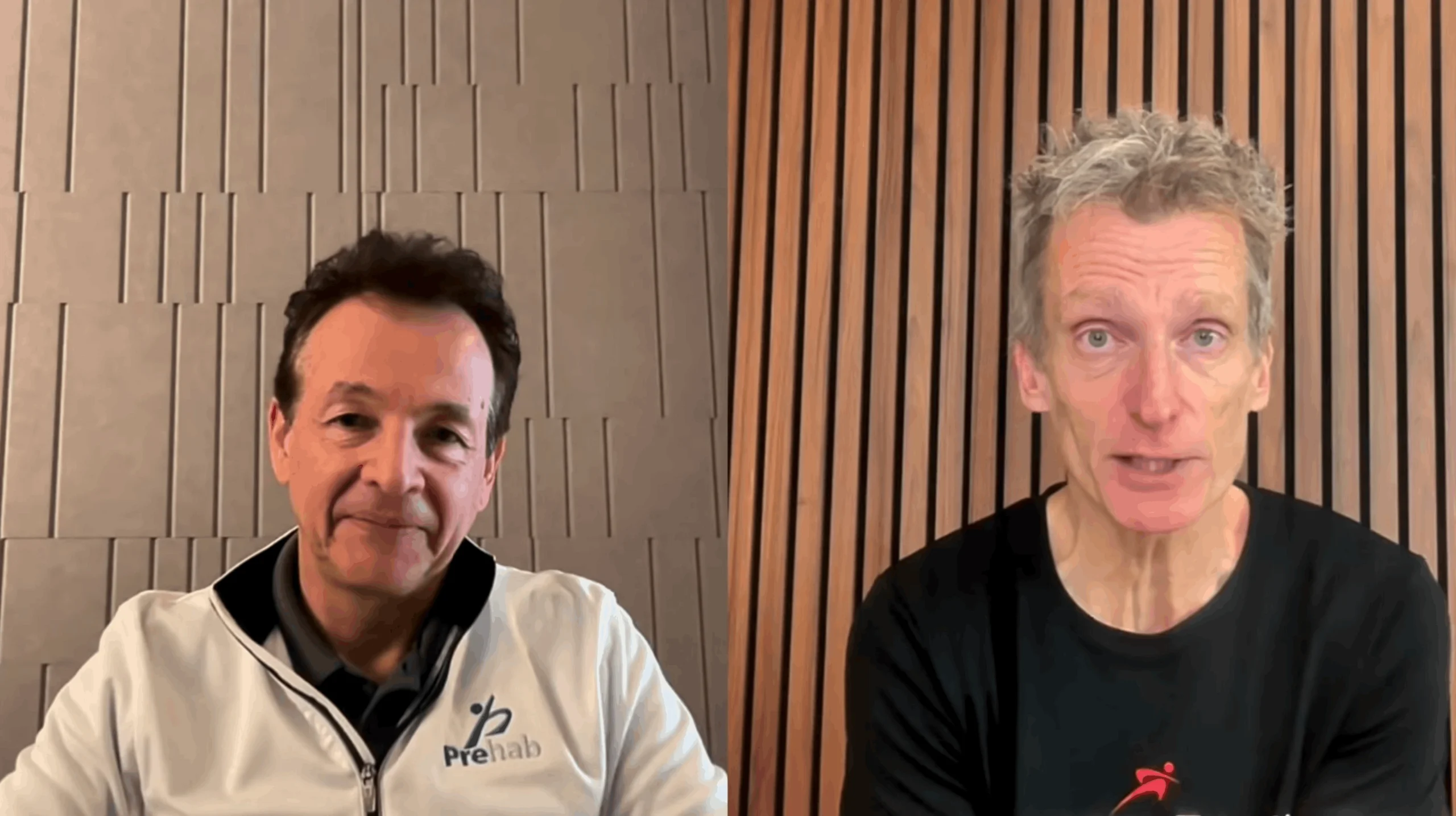
In a recent interview, Alex Gometz, Physical Therapist at Prehab, sat down with Fredrik Zillén, Running Technique Specialist, to discuss compensatory injuries and how spinal stiffness can contribute to knee pain, hip irritation, and other lower body overuse injuries.
Their message was simple: running is a whole body movement.
Watch the full conversion here:
Running Is a Whole Body System
As Dr. Gometz explains:
“Running is a whole body engagement. And many people focus in the lower extremity because I’m running with my legs, but they may not necessarily think of how much stress we’re putting in certain areas of our lower extremities because of lack of range somewhere else.”
— Dr. Alex Gometz, Physical Therapist at Prehab
When one area lacks range of motion, another area compensates. Over time, that compensation can create repetitive stress and eventually pain.
This is the foundation of many compensatory injuries we see at Prehab.
How Thoracic Spine Stiffness Can Lead to Knee Pain
The thoracic spine is designed to rotate and extend during running. With each stride, rotation should flow naturally from the spine to the pelvis and through the hips.
When thoracic mobility is limited:
- Rotation becomes restricted
- Pelvic movement becomes less efficient
- The knees absorb more rotational force
The knee is primarily a hinge joint. It is built for flexion and extension, not repeated rotational loading.
If the spine does not move well, rotational stress shifts downward. Over thousands of strides, that extra load can contribute to:
- Runner’s knee
- Patellofemoral irritation
- Chronic overuse knee pain
- Secondary ankle and hip strain
In these cases, the knee pain is often a symptom of a movement limitation elsewhere.
What Is a Compensatory Injury?
A compensatory injury develops when one part of the body works harder because another part is not functioning efficiently.
Instead of asking, “Why does my knee hurt?”
A more productive question is, “What is my knee compensating for?”
In runners, limited thoracic mobility is a common but overlooked driver of compensatory patterns. Treating the knee alone may provide temporary relief, but if the underlying restriction remains, symptoms often return.
This is why movement assessment matters.
Why the Knee Often Becomes the Problem Area
From a biomechanical standpoint:
- The hips are large, multi-directional joints
- The knees are smaller hinge joints
- The ankle absorbs high ground reaction forces
As you move down the kinetic chain, joints get smaller while forces increase.
If the thoracic spine or lumbar spine lacks mobility, the knee is frequently the first place where overload becomes noticeable. Add common running errors like overstriding or asymmetrical landing, and stress compounds quickly.
This is where running gait analysis becomes valuable.
Simple Tests for Thoracic Mobility
Dr. Gometz shares two simple screens runners can try at home.
1. Standing Rotation Test
- Stand facing a mirror
- Keep your feet planted
- Rotate your torso to look behind you
If you can clearly see your opposite shoulder in the mirror on both sides, rotation is likely sufficient. Marked asymmetry or restriction may indicate limited thoracic mobility.
2. Quadruped Thoracic Rotation Test
- Get on hands and knees
- Place one hand behind your neck
- Rotate upward toward the ceiling
- Keep your hips stable
Difficulty rotating upward may suggest restricted thoracic spine mobility.
These tests are not diagnostic, but they can highlight whether spinal stiffness may be contributing to lower body stress.
Mobility and Running Mechanics Work Together
Mobility alone is not enough.
Even with adequate thoracic range of motion, running form matters. Some runners consciously try to keep their torso rigid and only move their legs. This reduces natural spinal rotation and can increase stress at the knees.
Efficient running should feel coordinated:
- The thoracic spine rotates
- The pelvis counter-rotates
- The arms swing naturally
- The body moves as one integrated system
When that coordination is present, movement becomes smoother and more energy efficient.
How Prehab Uses Running Gait Analysis
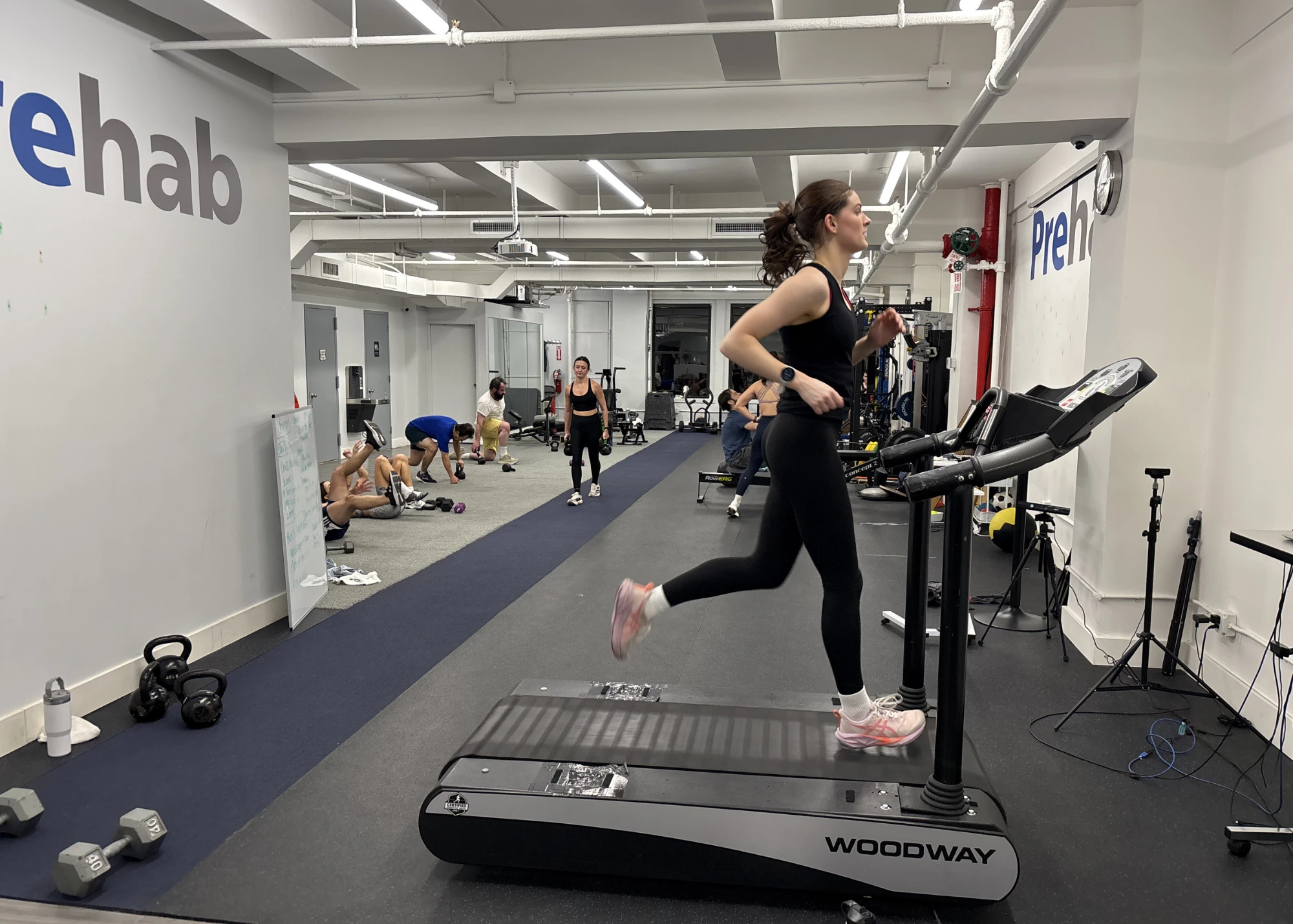
At Prehab, we combine clinical evaluation with advanced running gait analysis to identify the true driver of knee pain.
Using 3D motion analysis technology, we assess:
- Thoracic mobility
- Pelvic rotation
- Knee loading patterns
- Ground contact mechanics
- Asymmetries in stride
This allows us to determine whether knee pain is caused by:
- A mobility restriction
- A strength imbalance
- A technique issue
- Or a combination of factors
Instead of chasing symptoms, we address the source of compensation.
Why rehab when you can Prehab?
Up Your Game With A Prehab Free Discovery Visit
