

Serious runners tend to love data. Pace, mileage, cadence, heart rate, training load, recovery scores. Modern watches and apps make it easy to collect a lot of numbers, and many runners check their stats after every run to see how things are trending.
But there’s one type of information that almost never shows up in those metrics.
How your body actually moves when you run.
You can track every mile and every heartbeat, but if your mechanics are inefficient, those numbers only tell part of the story. Two runners might run the same pace with the same cadence, yet move very differently. One runner may be moving efficiently, while the other is wasting energy or putting extra stress on certain joints.
That’s where a professional running analysis can be useful.
Why Running Mechanics Matter
Running looks simple, but it’s actually a coordinated movement involving your hips, knees, ankles, core, and nervous system. When one part of the system is not working well, other areas often compensate.
Over time, small issues in your stride can lead to bigger problems.
Common examples include:
- Excessive hip drop
- Limited ankle mobility
- Overstriding
- Inefficient arm swing
- Weakness in the hips or core
- And more
Most runners have no easy way to spot these issues on their own. Many assume that running more miles is the best way to improve. In reality, improving how you move can sometimes make a bigger difference than simply adding mileage.
The Limits of Wearable Data
Wearable devices are great for tracking training metrics. They can tell you:
- How fast you ran
- How far you ran
- Your heart rate during the run
- Your cadence
What they cannot show is what’s happening with your movement.
For example, your watch cannot tell you:
- If your hips drop when your foot hits the ground
- Whether you are overstriding and slowing yourself down
- If one side of your body is working harder than the other
- Whether limited mobility is affecting your stride
These types of mechanical issues can influence both performance and injury risk.
Running Analysis at Prehab NYC
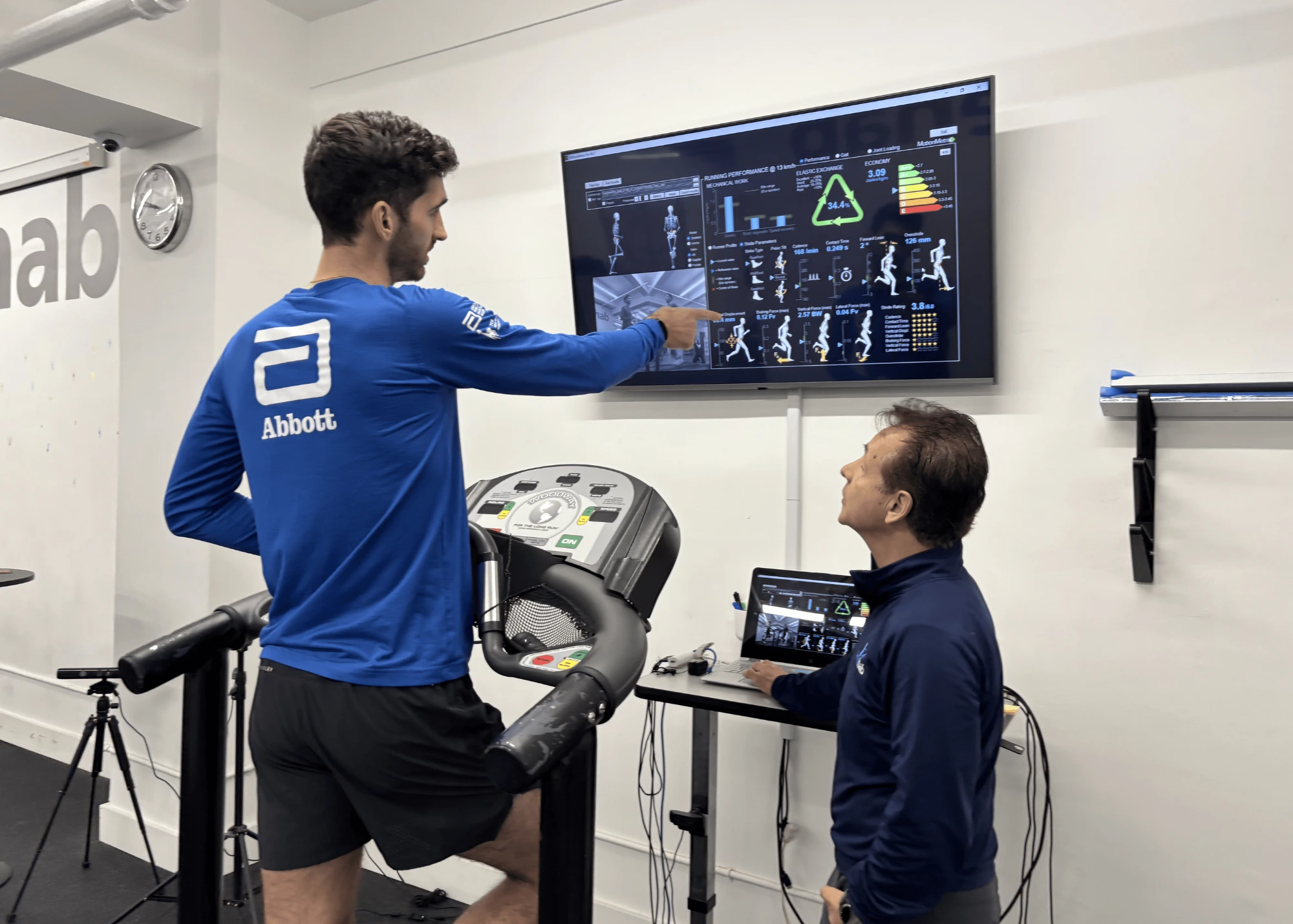
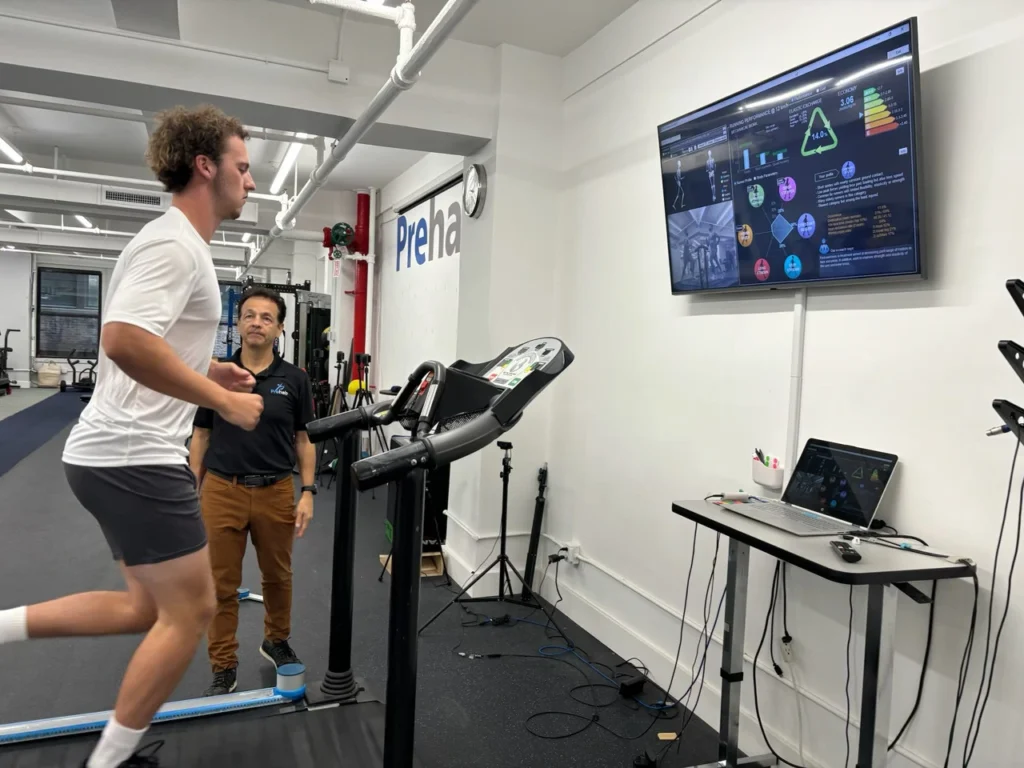
At Prehab NYC, runners can get a detailed look at their mechanics through an assessment using the GaitScrip Running Analysis System.
This type of evaluation focuses on how your body moves during your stride. During the session, specialists look at several factors, including:
- Stride mechanics
- Joint mobility
- Strength and stability
- Symmetry between the left and right side
- Overall movement efficiency
- Running economy that often beats V02Max data
Instead of guessing what might be affecting your running, you get objective feedback about how your body is moving.
What Runners Often Discover
Many runners are surprised by what shows up during a gait analysis.
Sometimes the issue is hip weakness that causes the knee to move inward. In other cases, limited ankle mobility reduces push-off power. Overstriding is another common finding and can increase braking forces with every step.
Once these factors are identified, runners can work on targeted exercises or small technique adjustments to improve efficiency and reduce unnecessary stress on the body.
Better Mechanics Can Improve Performance
When mechanics improve, runners often notice changes such as:
- Better running efficiency
- Less wasted energy during longer runs
- More consistent pacing
- Lower injury risk
- Improved overall performance
For runners who already track their training carefully, movement analysis can provide a missing piece of the puzzle.
Who This Type of Assessment Helps
A running mechanics assessment can be helpful for runners who:
- Enjoy analyzing performance data
- Want to run faster without simply adding mileage
- Deal with recurring running injuries
- Feel like they have hit a plateau
- Want expert insight into their running form and want immediate actionable advice
Combining traditional running metrics with movement analysis gives runners a more complete picture of their performance.
Take Your Running Data a Step Further
If you enjoy digging into your running data, analyzing your mechanics might be one of the most useful insights you have not explored yet.
A professional gait analysis looks at factors that watches and apps cannot measure. Understanding how your body moves can help you train smarter, run more efficiently, and potentially reduce injury risk.
For runners who like numbers and performance metrics, it often ends up being some of the most interesting data they see all year.
Why rehab when you can Prehab?
Up Your Game With A Prehab Free Discovery Visit