
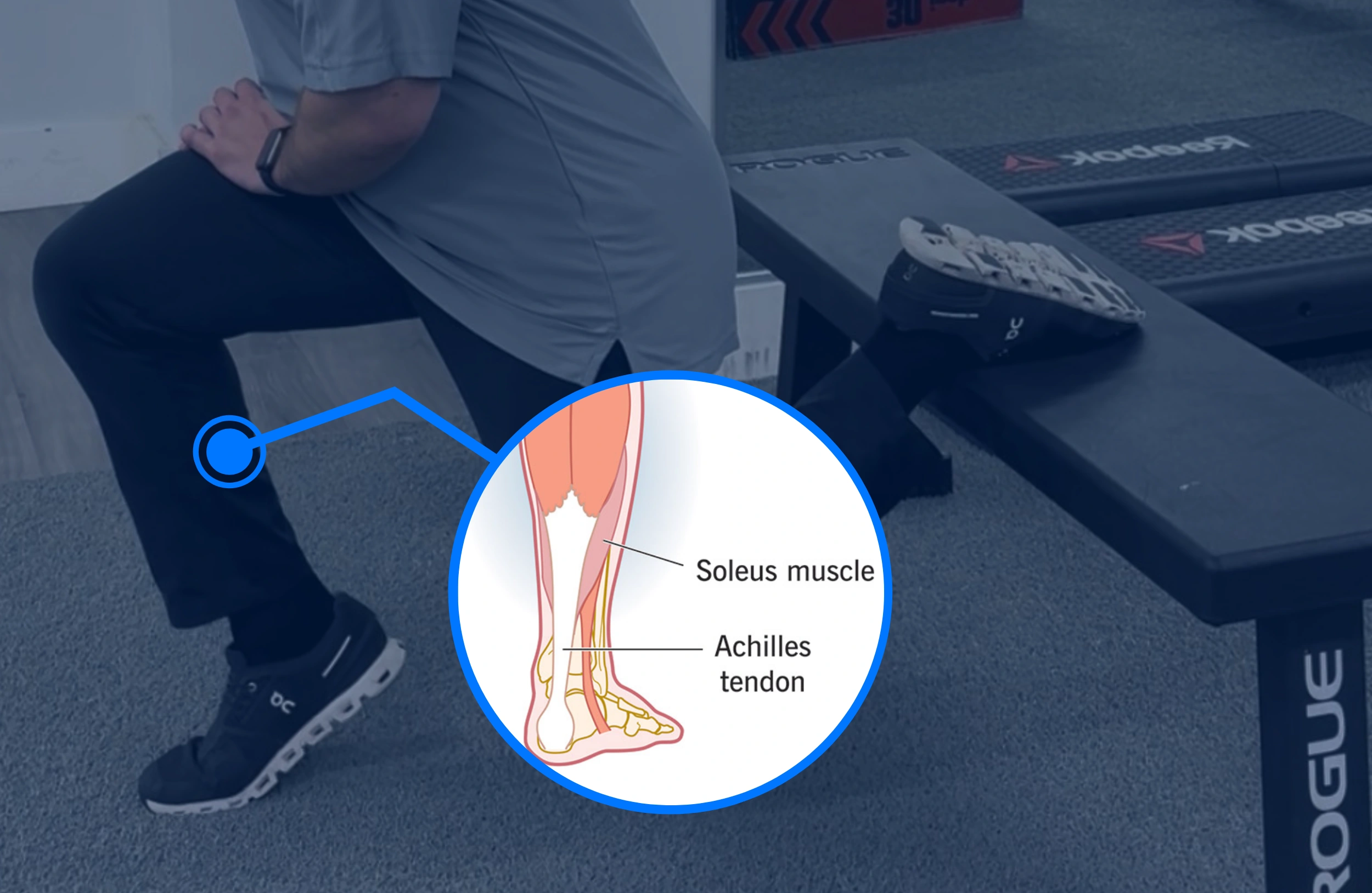
When you think about building strong legs for running, what comes to mind? Quads? Hamstrings? Big, defined calves?
While those muscles get all the spotlight, there is a quiet powerhouse hidden deep in your lower leg that does the heaviest lifting on your long runs. If you aren’t training it specifically, you are likely missing out on better performance and leaving yourself open to injury.
It is called the soleus.
Watch on YouTube: https://www.youtube.com/shorts/0cQd0LKbCQE
What is the Soleus?
The soleus is a powerful, flat muscle that sits directly beneath your gastrocnemius, which is the larger calf muscle you can actually see. Together, they form the calf complex, but they serve very different purposes.
While the outer calf is built for explosive, fast movements, the soleus is a pure endurance muscle. It has two vital jobs when your foot hits the ground:
- Force Absorption: It acts as a shock absorber, taking the brunt of the impact every time you land.
- Propulsion: It provides the steady, forward drive that keeps you moving step after step.
During distance running, the soleus does the vast majority of the work. As the miles stack up and your other muscles begin to tire, the soleus takes on even more of the load to keep your form from breaking down.
The Blind Spot in Traditional Training
Despite how critical it is for late-race stamina, a lot of runners completely neglect it.
The issue stems from how we typically train our calves. Standard exercises, like standing calf raises, are done with a straight knee. When your leg is straight, the outer calf takes over the movement, leaving the deeper soleus undertrained.
If you only focus on straight-leg movements, you end up with a structural imbalance: an outer calf that looks strong, but a deep endurance engine that is running on empty.
Why You Need to Target the Soleus
At Prehab, we emphasize building comprehensive lower leg resilience. When you actively target and strengthen the soleus, the benefits show up directly in your runs.
- Better Running Efficiency: You get maximum power output and smoother forward momentum with less wasted energy.
- Injury Resilience: Better shock absorption means significantly less stress radiating up into your shins, knees, and Achilles tendons.
- Delayed Fatigue: Strengthening this endurance anchor helps prevent the late-run form collapse that leads to cramping and overuse injuries.
How to Train It
To wake up the soleus, you have to take the outer calf muscle out of the equation. Because the outer calf crosses the knee joint, bending your knee relaxes it. This forces the soleus to do all the work.
You can easily target it by adding seated calf raises or bent-knee wall sits with heel raises into your strength routine.
Stop training just for the muscles you can see in the mirror. If you want a healthier, more resilient stride, start focusing on the muscle that is doing the actual work.
Disclaimer: This blog is intended for educational purposes only and should not replace individualized medical or nutrition advice. Always consult with a qualified healthcare provider or registered dietitian for recommendations specific to your needs and training goals.
Why rehab when you can Prehab?
Up Your Game With A Prehab Free Discovery Visit