
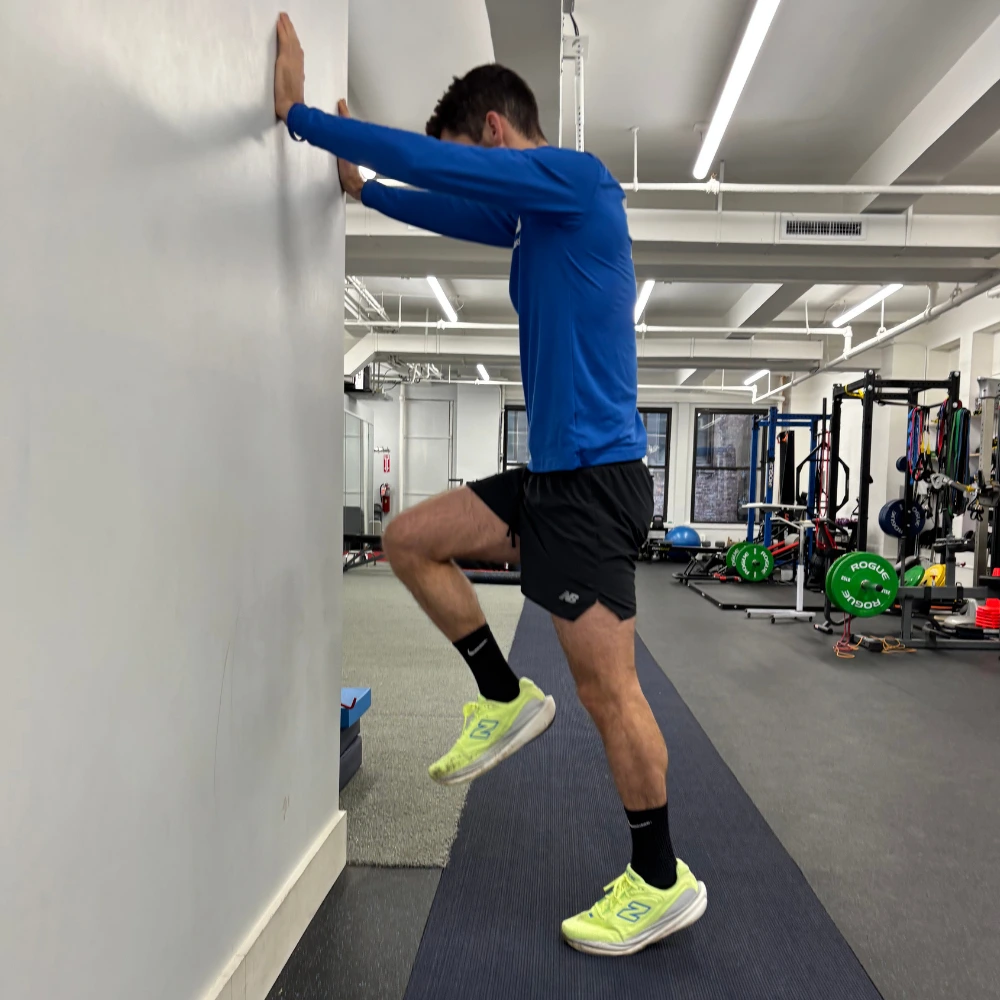
Heel raises may seem like a basic exercise, but poor calf and foot strength is one of the most common contributors to foot, ankle, and lower leg injuries among runners. When performed correctly, heel raises help the body absorb force more efficiently and reduce unnecessary stress on tendons and soft tissue.
At Prehab, heel raises are frequently used for both injury prevention and rehabilitation across a wide range of athletes and active individuals.
Running Injuries Heel Raises Can Help Prevent
Achilles Tendinitis
Achilles tendinitis often develops when the tendon is not strong enough to handle repeated loading from running, jumping, or daily activity. Heel raises progressively strengthen the calf muscles and Achilles tendon, improving their capacity to tolerate stress.
According to Dr. Aaron, Clinic Director at Prehab, explains:
“For Achilles tendinitis it’s very important to build up strength and do things that are challenging. Isometric heel raises can also be very helpful for runners.”
Isometric heel raises allow the tendon to be loaded safely and are often used early to reduce pain while maintaining strength.
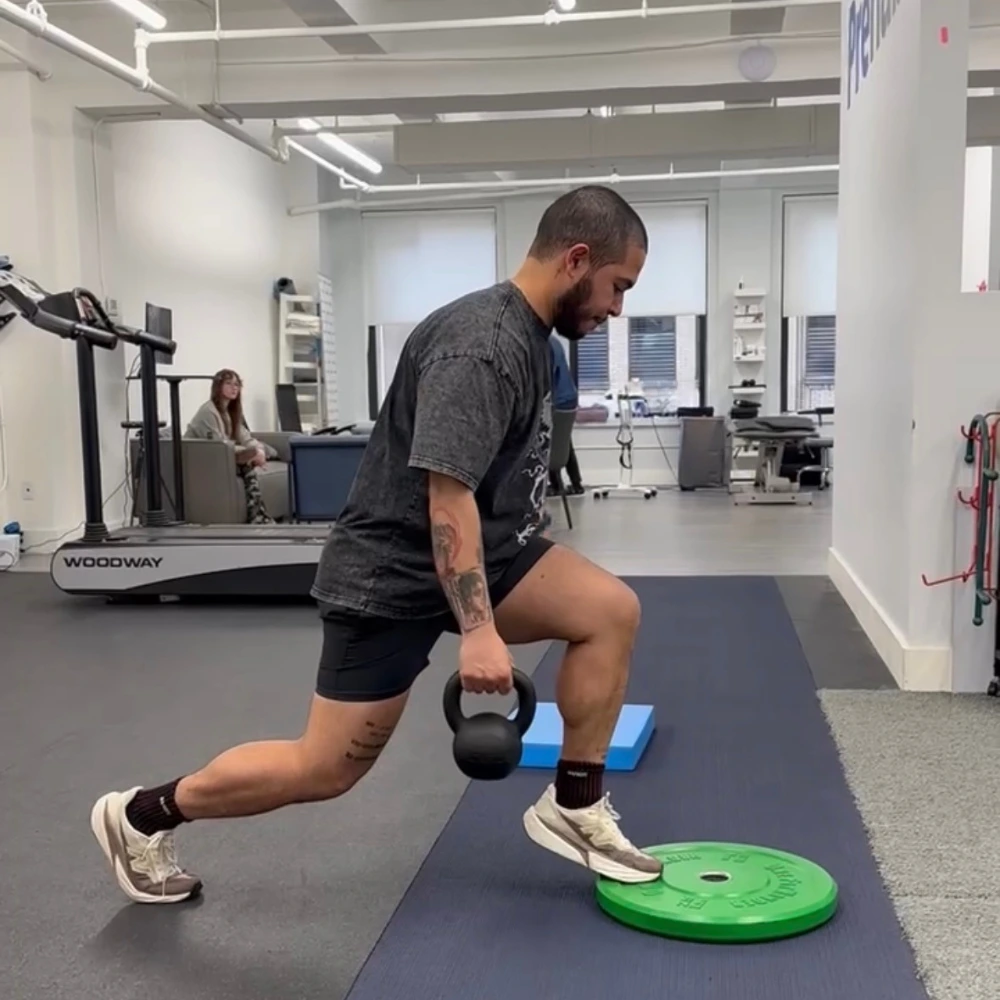
Plantar Fasciitis
Plantar fasciitis is commonly associated with weak foot muscles and limited ankle control. Heel raises strengthen the muscles that support the arch of the foot, helping reduce strain on the plantar fascia.
Dr. Aaron adds:
“Heel raises for plantar fasciitis can be targeted more by extending the toes or big toe during the heel raises.”
Extending the big toe during the movement increases activation of the foot muscles and makes heel raises more effective for plantar fascia support.
Ankle Sprains and Shin Splints
Heel raises improve ankle stability, balance, and lower leg strength. This helps reduce the risk of ankle sprains and improves how the lower leg absorbs impact, which can lower the likelihood of developing shin splints for all athletes including runners.
Common Heel Raise Mistakes that Runners Can Avoid
Proper technique is critical for heel raises to be effective. According to Dr. Aaron, common mistakes include:
- Not pushing through the big toe
- Allowing the foot or ankle to whip inward
- Skipping full range of motion
Focusing on controlled movement, proper foot alignment, and full range of motion ensures heel raises actually strengthen the intended muscles.
Final Thoughts For Runners
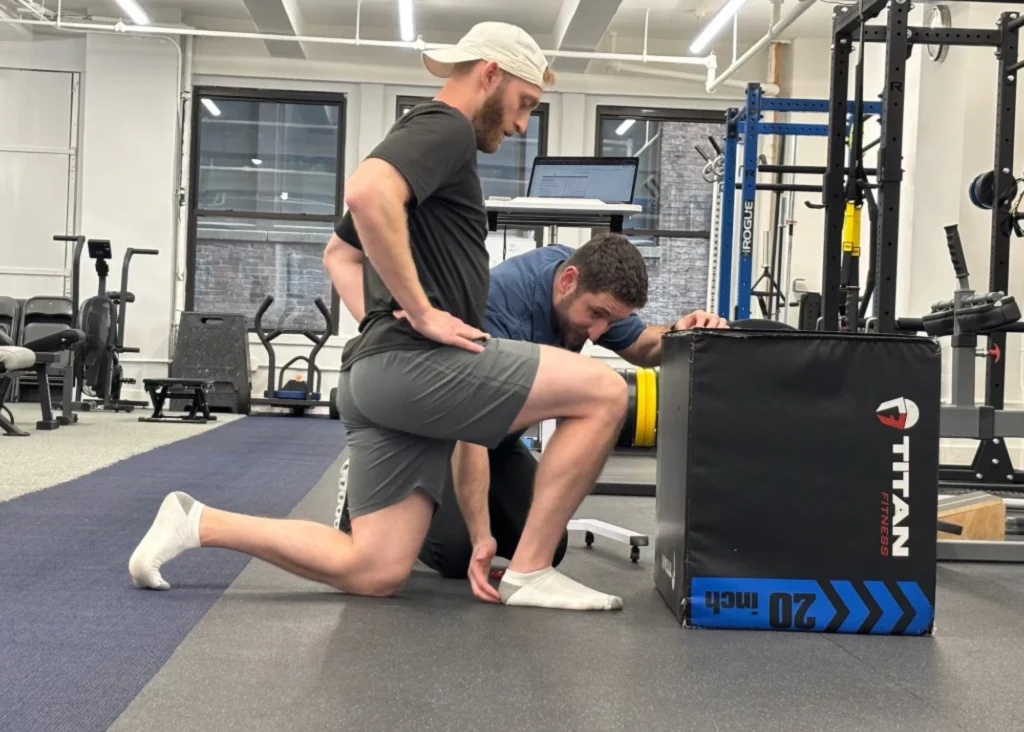
Heel raises are one of the most effective exercises for preventing foot and ankle injuries when performed with proper form and appropriate progression. Small technique adjustments can make a big difference in long term results.If you are dealing with pain, recurring injuries, or want guidance on progressing heel raises safely, working with a Prehab specialist can help you build a personalized program that supports long term performance and injury prevention.
Why rehab when you can Prehab?
Up Your Game With A Prehab Free Discovery Visit
