

If you’re a runner, chances are your favorite part of the day is lacing up your shoes, hitting the pavement or trail, and getting into a rhythm. The gym, on the other hand, can sometimes feel intimidating, crowded, or entirely disconnected from why you love running in the first place.
The good news? You don’t need a complex routine, heavy barbells, or a pricey gym membership to build the strength that keeps you running injury-free. Strength training for runners isn’t about transforming into a bodybuilder; it’s about bulletproofing your joints, improving your running efficiency, and making you more resilient mile after mile.
Let’s demystify the gym and start with the fundamentals. Here are three simple, low-barrier movements you can add to your routine today—no fancy equipment required.
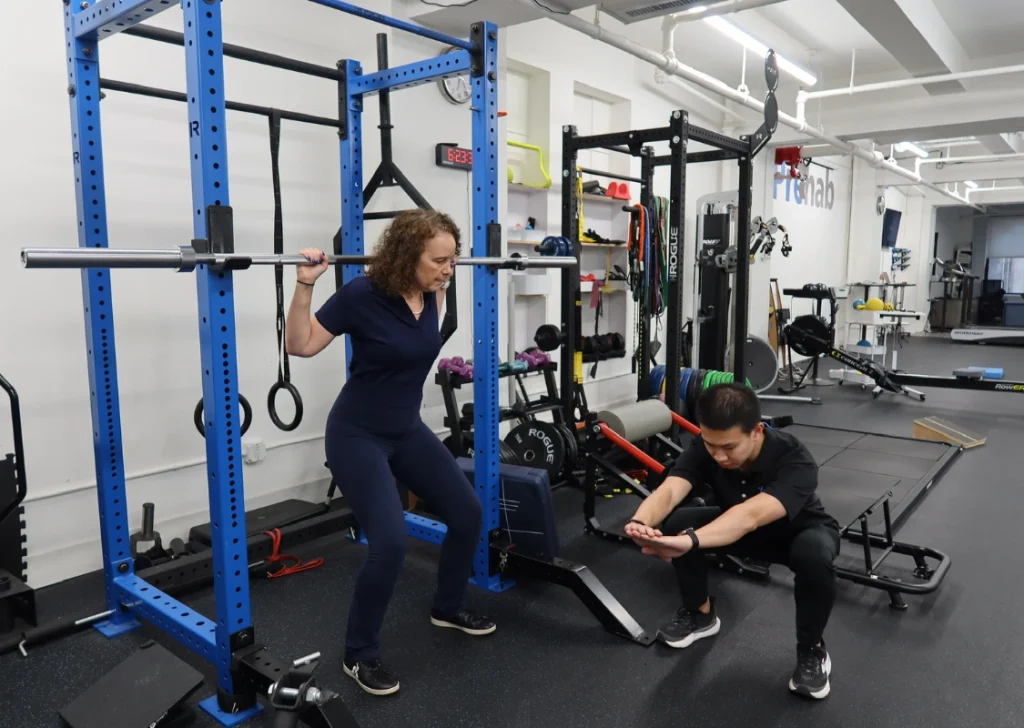
1. The Bodyweight Squat
Target: Quads, Glutes, Core
Running is essentially a series of single-leg hops forward, meaning your lower body absorbs two to three times your body weight with every single stride. Squats build foundational lower-body strength and teach your hips and knees to work together harmoniously.
- How to do it:
- Stand with your feet slightly wider than shoulder-width apart, toes pointed slightly outward.
- Keep your chest up and core engaged.
- Send your hips back and down as if you’re sitting back into an imaginary chair, keeping your weight centered through your whole foot.
- Lower until your thighs are roughly parallel to the floor, then press through your heels to return to standing, squeezing your glutes at the top.
- Sets & Reps: 3 sets of 10–12 repetitions.
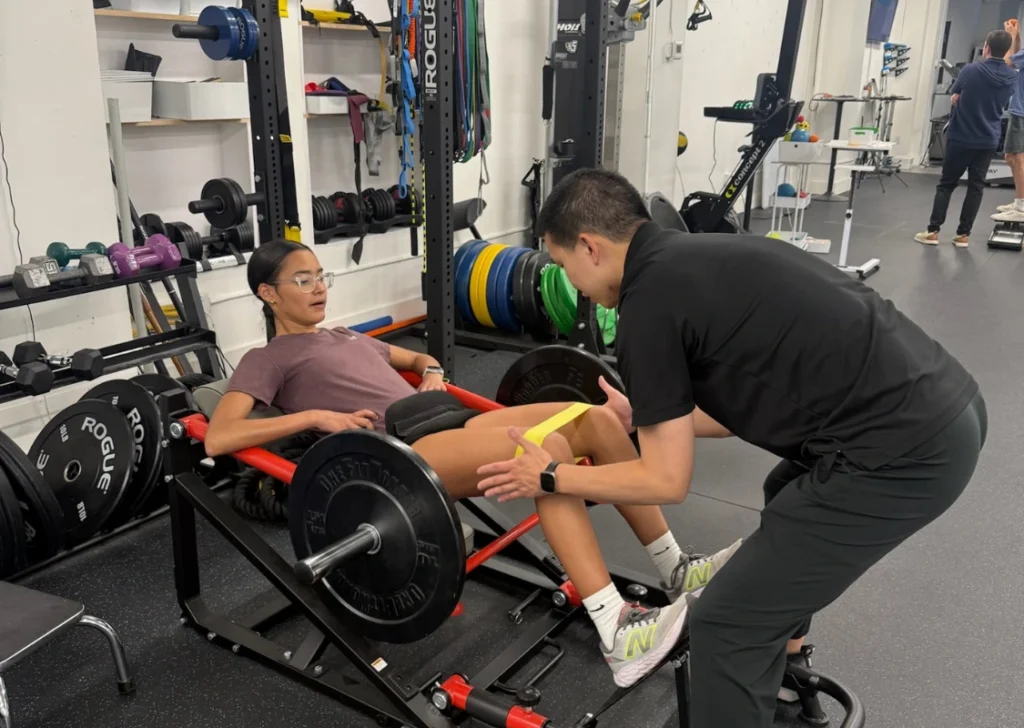
2. The Glute Bridge
Target: Glutes, Hamstrings, Lower Back
Many runners suffer from “dormant glute syndrome”—especially if we spend hours sitting at a desk during the day. When your glutes aren’t firing properly, your hamstrings and lower back end up picking up the slack, leading to common aches and pains. The glute bridge is the ultimate antidote.
- How to do it:
- Lie on your back with your knees bent and your feet flat on the floor, hip-width apart. Your heels should be close enough that your fingertips can just brush them.
- Press through your heels and drive your hips upward toward the ceiling by squeezing your glutes.
- Form a straight line from your knees to your shoulders (avoid arching your lower back past neutral).
- Pause for a second at the top, then slowly lower your hips back down.
- Sets & Reps: 3 sets of 12–15 repetitions.
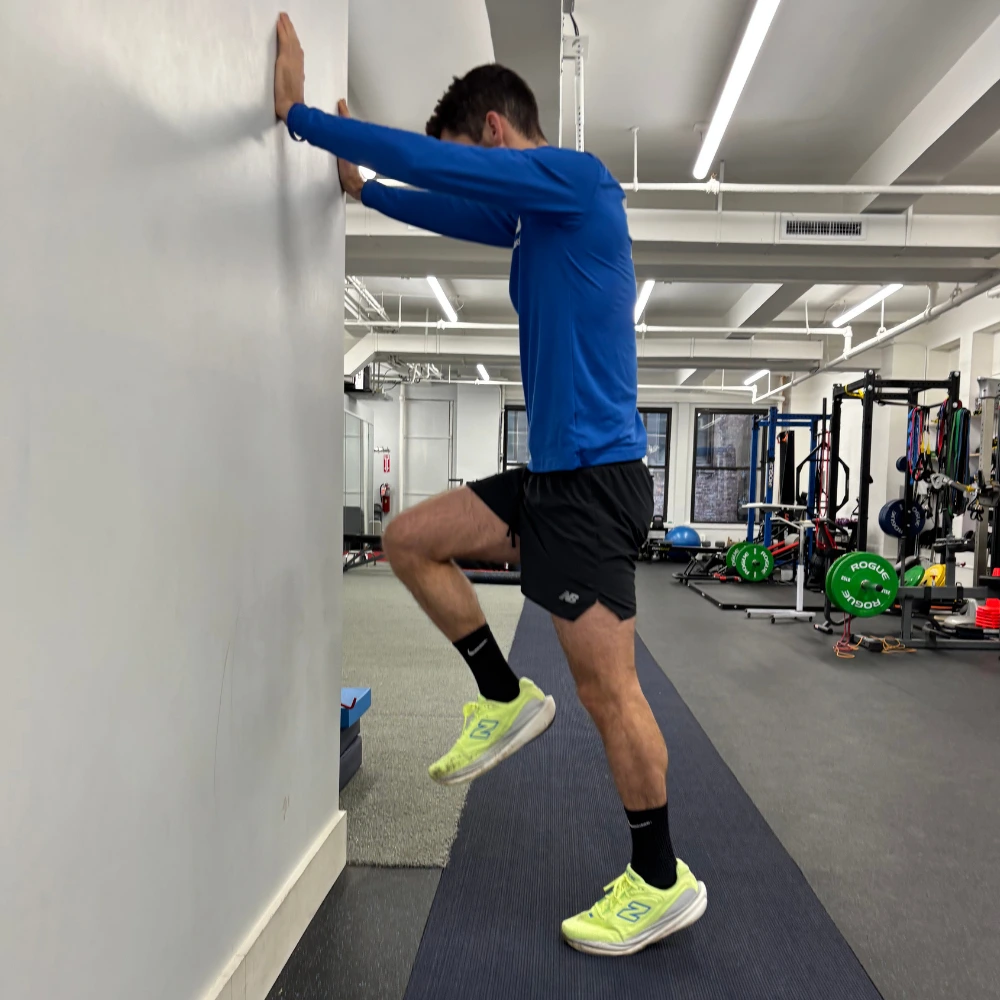
3. The Calf Raise
Target: Calves, Achilles Tendon, Ankles
Your calves and Achilles tendons act as massive springs every time your foot pushes off the ground. Strengthening them helps absorb impact and powers your stride forward while protecting against stubborn lower-leg issues like shin splints and Achilles tendinitis.
- How to do it:
- Stand tall near a wall or the back of a chair for light balance support if needed.
- Rise up onto the balls of your feet as high as you can, keeping your ankles stable (try not to roll your ankles outward).
- Hold the top position for a brief moment, then slowly and with control lower your heels back down to the floor.
- Pro-tip: To get an extra stretch and work through a full range of motion, stand on the edge of a stair step so your heels can dip below the step level.
- Sets & Reps: 3 sets of 15–20 repetitions.
How to Fit This Into Your Routine
You don’t need to spend an hour sweating away in the weight room. Start small: incorporate these three movements twice a week after an easy run or on a dedicated rest day.
By taking just 10 minutes to focus on these foundational patterns, you’ll build the muscular armor you need to run stronger, feel better, and keep chasing your goals.
Ready to take your running health to the next level? Head over to Prehab to discover more expert routines, injury-prevention tips, and movement guides designed specifically for runners.
Disclaimer: This blog is intended for educational purposes only and should not replace individualized medical or nutrition advice. Always consult with a qualified healthcare provider or registered dietitian for recommendations specific to your needs and training goals.
Why rehab when you can Prehab?
Up Your Game With A Prehab Free Discovery Visit